Supported Parenting Interventions for Refugees and Minorities
The PIRM Study: A Randomised Trial of Parenting Programmes and Digital Feedback for Refugee Families in Norway
Executive summary
The PIRM study examined whether structured parenting programmes work for families with a refugee background in Norway, and whether a digital progress feedback system can enhance outcomes. When the project launched, research on parenting interventions tailored to refugee families in a European context was extremely limited, and there was a clear need for a solid empirical foundation. The study recruited 209 refugee families (270 parents) from 12 municipalities across the country, randomly assigned to one of two established programmes — Incredible Years (IY) or the International Child Development Programme (ICDP) — and to groups with or without a weekly digital feedback system (MFS, via the MittEcho platform). Primary outcomes were parental stress, children’s behavioural problems, and parenting practices. Both programmes showed positive effects, but with different strengths: IY improved parents’ use of praise and incentives, while ICDP was more effective in reducing children’s problem behaviour. Where adopted, the feedback system contributed to reducing negative parenting practices. Qualitative data revealed that the group format had independent value as a social support structure, and that children — without knowing about their parents’ participation — reported changes in time spent together and everyday interactions that directly reflect programme content. The study provides practitioners and policymakers with a robust evidence base for the use of parenting interventions with refugee families.
Background and Knowledge Gaps
Parenting interventions are structured programmes designed to strengthen parenting skills, improve the parent–child relationship, and promote positive social development. In Norway, such programmes are widespread, and international research consistently documents strong outcomes. Two of the most established are Incredible Years (IY) and the International Child Development Programme (ICDP), both designed for broad population use and available through municipal services.
What was missing when the PIRM study launched was evidence on whether these programmes actually work for refugee families — a group with particular circumstances and challenges. Being a parent in a new country means navigating an unfamiliar welfare and child protection system, managing cultural differences in parenting norms, and coping with the everyday pressures that migration brings. Research on parenting interventions conducted specifically for refugee families in Europe was extremely limited, and the existing evidence base was drawn almost entirely from other contexts.
There was also little knowledge about the usefulness of digital progress feedback systems as a supplement to parenting programmes in a preventive setting. Such systems are well established in clinical treatment, where they help make interventions more responsive, but had not been systematically tested in a refugee-adapted parenting intervention context. The PIRM study was designed to address both gaps: to document the effectiveness of established programmes for refugee families, and to examine the added value of a digital feedback component.
Method
The PIRM study used a mixed methods design combining quantitative and qualitative data collection. The quantitative core was a randomised 2×2 factorial design, in which 209 refugee families (270 parents, mean age 38) from 12 municipalities across Norway were recruited, primarily through refugee services. Approximately half had lived in Norway for less than one year. Randomisation operated on two levels: parents were randomly assigned to either Incredible Years (IY, 15 weeks) or the International Child Development Programme (ICDP, 12 weeks), both delivered in group-based settings. Groups were also randomly assigned access to a digital progress feedback system (MFS) developed through the MittEcho platform, completed by parents and reviewed by group leaders weekly.
Primary outcomes were parental stress, children’s problem behaviour, and parenting practices. Secondary outcomes included parents’ mental health and resilience. The qualitative component consisted of in-depth interviews with parents, children, and group leaders about their experiences of participation, including what it meant to be new to Norway and to navigate Norwegian society. Questionnaires and materials were translated into eight languages to ensure accessibility. A significant limitation was high participant dropout, particularly due to language barriers, health problems, and competing commitments — partly addressed through measures including hiring language assistants and recruiting in additional municipalities.
Findings and Results
The study shows that structured parenting interventions have a positive effect on children’s behaviour and parental stress among families with a refugee background — a finding that carries clinical and policy significance given the previously sparse evidence for this group. Effects vary between programmes, and the results support more differentiated use in practice settings.
Effects of the Two Parenting Programmes
Parents in Incredible Years showed the greatest gains in using praise and positive reinforcement with their children. ICDP was more effective in reducing children’s problem behaviour. Both programmes contributed to lowering parental stress, but with varying strength across outcomes. These differences suggest the two programmes complement each other and may suit families with different needs.
The Progress Feedback System (MFS)
The digital feedback system was used less than anticipated. Where it was adopted, however, it contributed to a reduction in negative parenting practices. Group leaders reported that the system required adaptation to the organisational frameworks of the municipalities, and that training and follow-up were decisive for whether it was actually used.
Parents’ Experiences: Group Community and Fear of Child Services
Qualitative data revealed that the group format had independent therapeutic value beyond programme content. Parents highlighted the value of meeting others in similar situations and being able to discuss challenges in a safe space. A particularly prominent theme was fear of Norwegian child protection services — a fear that created barriers to recruitment and participation, and which parents described as becoming more manageable through information and the sense of community in the groups. Understanding the Norwegian system and feeling recognised as competent parents was described as valuable in itself.
Children’s Perspectives
Interviews with children revealed challenges including language barriers, experiences of exclusion, and bullying. A surprising and important finding was that most children did not know their parents had taken part in a parenting programme. Despite this, the children reported changes in time spent together and everyday interactions — more praise, more shared activities — that directly mirror what the programmes train parents to do. This indicates that the changes in parents were real and perceptible, even without the children being consciously aware of the intervention.
Publications and Dissemination
As of the reporting date, 6 peer-reviewed articles have been published, 5 are under review, and 1 has been accepted for publication. Findings have been presented at national and international conferences, and through a final digital seminar with broad invitations to practitioners — including a contribution from IMDi on the significance of parenting interventions for integration. Three doctoral candidates have used data from the study, and one has already defended their thesis.
Conclusion and Implications
The PIRM study documents that established parenting interventions work for refugee families in Norway, filling a knowledge gap that has long constrained evidence-based practice with this group. The results provide a solid foundation for continuing and scaling the delivery of IY and ICDP within municipal refugee services, and contribute to the European evidence base in a field where Norwegian research is now taking a clear position.
For practitioners, it is particularly important to note that the group format and sense of community appear to carry therapeutic value in themselves — not just as a framework for programme content, but as a space where parents can address fears about Norwegian welfare institutions and feel recognised as competent. This should be a deliberate part of implementation, not treated as an incidental by-product.
For policymakers, the study points to a persistent structural challenge: research takes time, while practice settings need solutions now. Better mechanisms for ongoing knowledge transfer — for example through RKBU Nord’s course portal and inter-municipal collaboration — can help bridge this gap. The study also underlines the value of user involvement in research: early engagement with refugee parents and service managers was decisive for the recruitment strategy and for ensuring the programmes felt relevant.
Active doctoral projects will in the coming years add knowledge on long-term effects, fathers’ experiences, and children’s perspectives — building on the empirical foundation the PIRM study has established.
Articles and news

Former Kavli Trust Chair Appointed Knight of the Order of St. Olav
Former Chair of the Kavli Trust, Supreme Court lawyer Pål W. Lorentzen, has been appointed Knight First Class of the Order of St. Olav.

Mental health support for refugee children
Can group conversations be a crucial first step in addressing post-traumatic stress (PTSD) in refugee children?
Foundations – a force we must put to use now
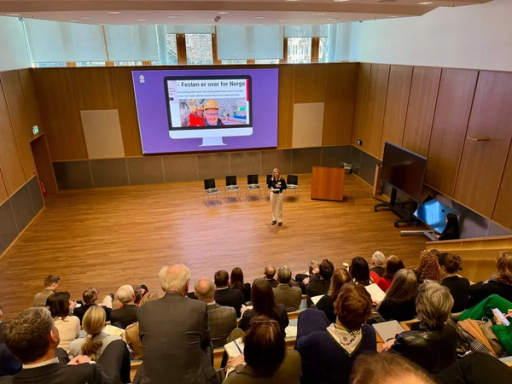
Exclusion. Mental ill health. Climate crisis. Rising inequality. We live in a time defined by complex challenges – challenges that demand more than one solution, more than one actor, and more than one approach. In the face of all this, there is a resource that remains underutilised: foundations.
Compounding impact by sharing knowledge
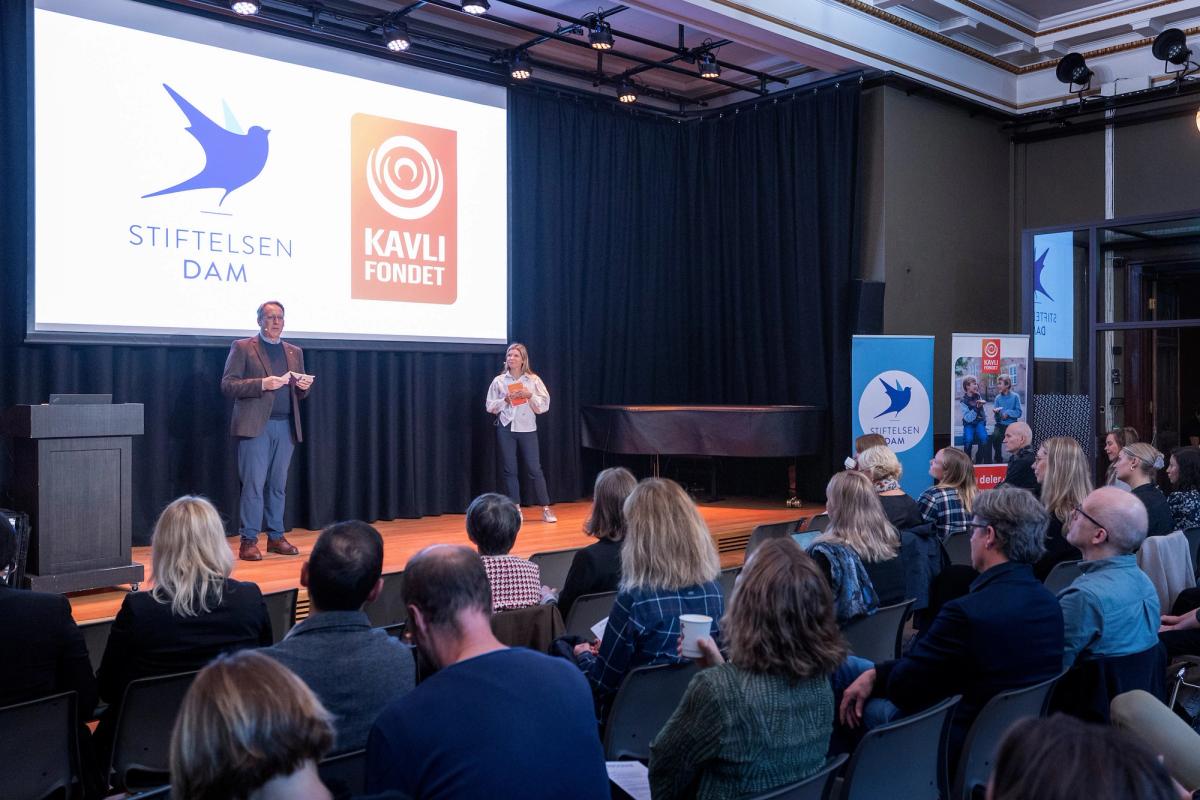
Facilitating knowledge sharing between recipients of grants from the Programme on Health Research is a priority to Kavli Trust.